Knoxville Car Accident Lawyer Explains Your Crash Report
After a car accident in Knoxville, one of the most important documents you’ll receive is the Tennessee Uniform Traffic Crash Report. This report provides an official record of the collision and often serves as a key piece of evidence during insurance claims and personal injury cases.
Although a police accident report does not determine legal fault, it contains valuable information that can influence how your claim is evaluated. Unfortunately, these reports are often filled with abbreviations, diagrams, codes, and technical language that can be difficult to understand.
At Knoxville Car Accident Lawyer, we can review your police report, explain what it means, identify any errors, and use it as part of a comprehensive investigation to protect your rights.
Why Is a Tennessee Police Accident Report Important?
A police accident report documents the responding officer’s observations and records important facts about the collision. Insurance companies frequently rely on this information when investigating claims, making it essential to understand what your report says.
Your Tennessee crash report may include:
- Date, time, and location of the accident
- Driver and passenger information
- Vehicle descriptions
- Insurance information
- Roadway and weather conditions
- Witness statements
- Officer observations
- Contributing factors
- Traffic citations
- A diagram of the collision
While the report is an important source of information, it is only one piece of evidence used to determine liability.
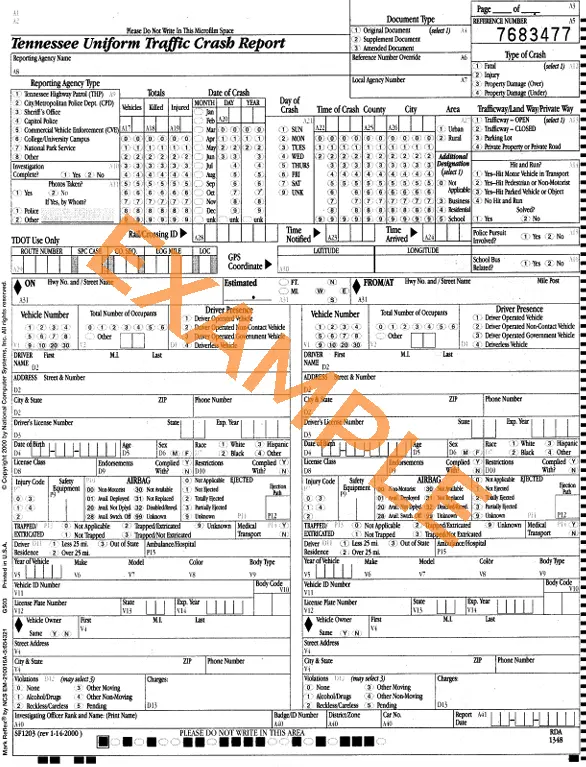
Understanding the Different Sections of a Police Accident Report
Accident Information
This section identifies when and where the accident occurred, including the roadway, intersection, county, city, and investigating agency’s report number.
Review this information carefully to make sure it accurately reflects where and when the collision happened.
Driver and Vehicle Information
Each driver involved in the accident will have a section listing identifying information, such as:
- Driver’s license information
- Contact information
- Insurance carrier
- Vehicle make, model, and year
- Vehicle Identification Number (VIN)
- License plate number
- Registered owner
Even small errors in this section can create unnecessary delays during the claims process.
Road and Weather Conditions
The responding officer also records environmental conditions that may have contributed to the crash, including:
- Rain or snow
- Wet or icy roads
- Lighting conditions
- Visibility
- Construction zones
- Traffic control devices
These details can become important when determining how the accident occurred.
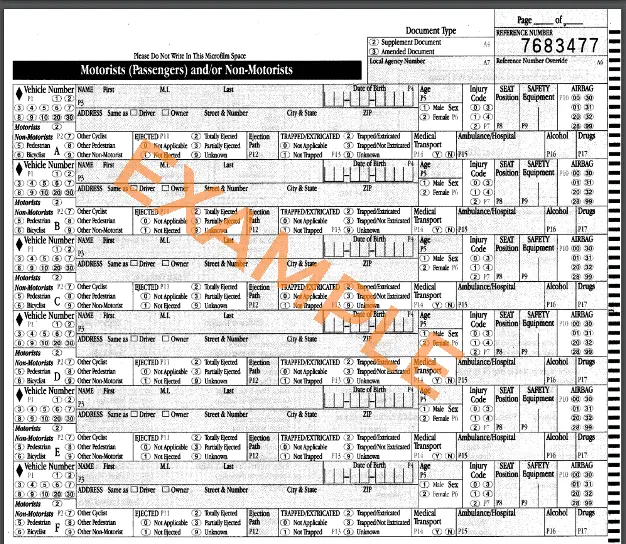
Understanding the Crash Diagram
Most Tennessee accident reports include a diagram illustrating how the officer believes the collision occurred.
The diagram may show:
- Direction of travel
- Vehicle positions
- Point of impact
- Traffic lanes
- Road markings
- Traffic signals
- Skid marks
- Final resting positions
Although helpful, the diagram reflects the officer’s observations and should not be considered the final determination of fault.
Contributing Factors and Traffic Violations
Another important section identifies factors the officer believes contributed to the accident.
Common examples include:
- Distracted driving
- Following too closely
- Speeding
- Failure to yield
- Improper lane changes
- Driver inattention
- Running a stop sign or red light
- Driving under the influence
If traffic citations were issued, they will also appear in the report. However, receiving a citation does not automatically establish legal liability, and the absence of a citation does not prevent an injured victim from pursuing compensation.
Injury and Witness Information
The report typically includes a preliminary description of injuries sustained by those involved and lists witnesses who spoke with law enforcement.
Keep in mind that some injuries, such as whiplash, concussions, or soft tissue injuries, may not become apparent until hours or days after the collision. Seeking prompt medical treatment helps protect both your health and your injury claim.
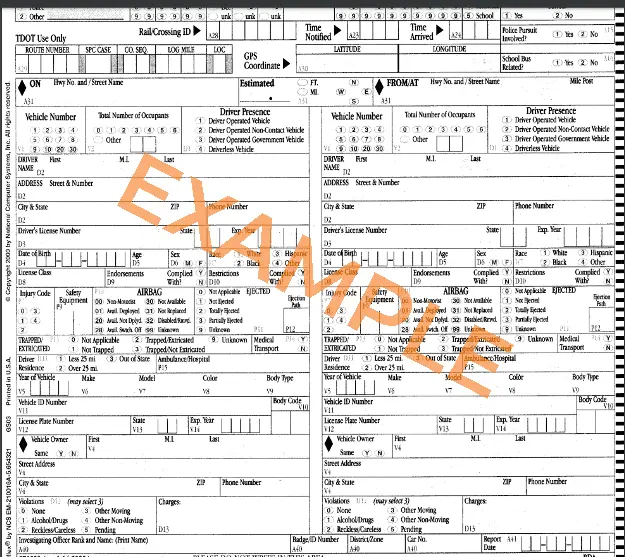
Common Errors Found on Police Accident Reports
Police officers often complete traffic crash reports under challenging circumstances, which means mistakes can happen.
Some of the most common errors include:
- Incorrect names or contact information
- Missing witnesses
- Incorrect insurance information
- Vehicle description errors
- Inaccurate crash diagrams
- Wrong direction of travel
- Missing roadway details
If you notice inaccuracies, consult a Knoxville car accident lawyer before attempting to resolve the issue yourself. Additional evidence may be necessary to clarify or correct the information contained in the report.
Can a Police Report Affect Your Injury Claim?
Yes, but it is only one part of the overall investigation.
Insurance companies and attorneys also review medical records, photographs, surveillance footage, witness statements, vehicle damage, electronic vehicle data, and expert accident reconstruction when determining liability.
Even if the police report appears unfavorable, additional evidence may support your version of events and strengthen your claim.
How a Knoxville Car Accident Lawyer Can Help
Understanding your Tennessee Traffic Crash Report is only the beginning of building a successful injury claim.
An experienced Knoxville car accident lawyer can:
- Review your accident report for errors or inconsistencies
- Gather additional evidence to support your case
- Locate and interview witnesses
- Obtain surveillance or dashcam footage
- Work with accident reconstruction specialists when needed
- Negotiate with insurance companies on your behalf
- Pursue maximum compensation for your medical expenses, lost wages, pain and suffering, and other damages
Having knowledgeable legal representation can make a significant difference when dealing with complex insurance claims and disputed liability.

Frequently Asked Questions
Does a Tennessee police accident report determine who caused the accident?
No. A police report documents the responding officer’s observations and opinions, but it does not legally determine fault. Liability is established by considering all available evidence.
What should I do if my accident report contains incorrect information?
Review the report carefully after receiving it. If you notice factual errors, consult a Knoxville car accident lawyer who can advise you on the best way to address the issue and preserve your claim.
Can I recover compensation if the police report says I was partially at fault?
Possibly. Tennessee follows a modified comparative fault rule, meaning you may still recover compensation if you were less than 50% responsible for the accident. An attorney can evaluate the evidence and explain your legal options.
How long does it take to receive a Tennessee accident report?
Most Tennessee uniform traffic crash reports are available within a few days after the collision, although processing times vary depending on the investigating agency.
Need Help Understanding Your Police Accident Report?
If you’ve been injured in a Knoxville car accident, understanding your Tennessee police accident report is an important step toward protecting your legal rights. An experienced Knoxville Car Accident Lawyer can review the report, explain what it means, identify potential errors, and build a strong case supported by all available evidence.
Schedule a free consultation today to discuss your accident, have your police report reviewed, and learn about your options for pursuing the compensation you deserve.
